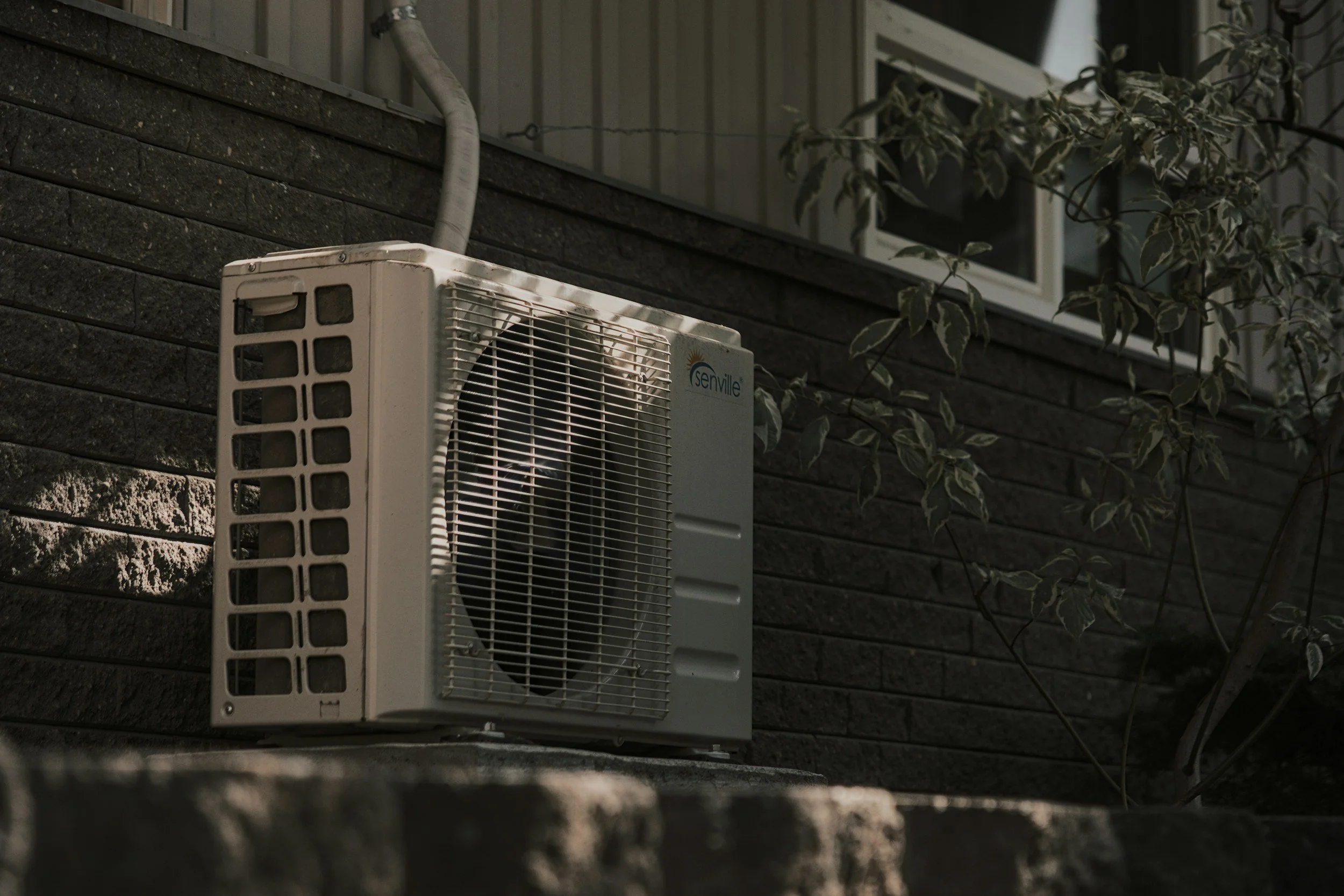
It's 99 degrees. The AC just died. Your customer is on Google right now.
SEO for HVAC companies. I help you rank for the searches that happen when homeowners need you most. Emergency repairs. System replacements. Seasonal maintenance. The calls that keep your trucks rolling and your schedule full year round.
Google Business Profile
·
Review Generation
·
Local SEO
·
Reputation Management
Google Business Profile · Review Generation · Local SEO · Reputation Management
HVAC is a search-first industry now. Most contractors haven't caught up.
Nobody plans for their air conditioner to break. Nobody schedules a furnace failure. When it happens, the homeowner picks up their phone and types "AC repair near me" or "emergency furnace repair [city]." That search happens millions of times a year across the country. And whoever shows up first gets the call.
That's the reality of HVAC in 2026. The old playbook still has value. Yard signs, truck wraps, referrals from happy customers, relationships with property managers. Those things work. But they don't work at 11pm when a family's AC goes out in July and they need someone now.
Google is where urgency meets decision-making for HVAC customers. And right now, most independent HVAC contractors are losing that moment to three types of competitors.
First, the franchise operations. Companies with hundreds of locations, national marketing budgets, and dedicated SEO teams building location pages for every city they serve. They don't always do the best work. But they show up first.
Second, the lead generation platforms. Angi, HomeAdvisor, Thumbtack, and Google's own Local Services Ads. These platforms sit between you and your customer. They sell the same lead to multiple contractors and take a cut every time. Your cost per acquired customer through these platforms keeps climbing.
Third, the handful of local competitors who figured out SEO early. They have hundreds of reviews, service pages that rank, and a Google Business Profile that Google trusts. Every month they hold those positions, the gap between you and them gets wider.
The good news is that most HVAC companies have done almost nothing with SEO. The bar is lower than you'd think. A focused strategy built around the right services, the right locations, and the right content can move the needle faster in HVAC than in most industries.
Seasonality is your biggest SEO opportunity. Most HVAC companies waste it.
HVAC search demand is predictable. AC-related searches spike in late spring and peak in summer. Heating searches climb in fall and peak in winter. Maintenance searches have smaller peaks in spring and fall. This pattern repeats every year.
Most HVAC companies react to these cycles. They run ads when the busy season starts and pull back when it slows down. That's expensive and it puts you in a bidding war with every other contractor doing the same thing.
SEO lets you get ahead of the cycle instead of chasing it.
That's the play. Build the content before the season, not during it. When demand surges, you're already positioned. Your competitors are scrambling to outbid each other on paid clicks. You're getting calls for free.
The same approach works for heating. Build furnace repair and heating installation content in late summer. When the first cold snap hits, your pages are established and ranking. Every year this cycle works in your favor if the content exists.
What HVAC SEO includes
Service Page Optimization
AC repair is not the same search as AC installation. Furnace tune-up is not the same as furnace replacement. Heat pump repair is not the same as ductless mini-split installation. Every service you offer is a separate search with separate intent and separate competition.
I build and optimize individual pages for each service targeting the exact terms homeowners use when they need that specific thing. A homeowner searching "AC not blowing cold air" is in a different situation than one searching "cost to replace central air conditioner." Both are potential customers. They need different pages.
Emergency and Urgent Service Targeting
A significant percentage of HVAC searches are emergencies. "AC stopped working." "No heat." "Furnace making loud noise." "Emergency HVAC repair near me." These are some of the highest-converting searches in the entire home services category because the customer needs help immediately.
I create content specifically targeting emergency intent searches. These pages are structured to load fast, provide a clear call to action, and rank for the urgent, high-value queries that most HVAC websites completely ignore.
HVAC is a local business. Every relevant search has a geographic component. I optimize your Google Business Profile with the right categories, service descriptions, photos of your work and team, and a review strategy that builds volume consistently. I also build location-specific landing pages for each city or zone in your service area.
For HVAC contractors covering large service areas, this is one of the highest-impact strategies available. A contractor serving a metro area with 15 suburbs needs 15 location pages, not one homepage trying to rank everywhere.
Content That Matches How Homeowners Search
Homeowners don't search like contractors talk. They don't search "HVAC system diagnostics." They search "why is my AC running but not cooling" or "weird smell coming from furnace" or "how much does a new furnace cost."
I build content around the actual language homeowners use. Educational content that answers their questions, builds trust, and captures search traffic at every stage. Some of that traffic converts immediately. Some of it brings them back when they're ready to buy. All of it positions your company as the authority in your market.
HVAC websites are often built on older platforms or generic templates with poor mobile performance, slow load times, and no structured data. These issues hurt rankings silently. I audit your site, fix what's broken, and make sure Google can crawl and index every page that should be ranking.
Review Strategy
In HVAC, reviews are not optional. They're a ranking factor for the map pack and they're the first thing a homeowner looks at before calling. I help you build a system that generates consistent new reviews after every service call without being awkward or pushy.
The math is simple. If you run 20 service calls a week and convert even 25% of those into reviews, that's 20 new reviews a month. In a year, you have 240 reviews. Most of your competitors have 40 to 80. That gap shows up in the map pack and in the homeowner's decision.
What homeowners actually search and why it matters
Understanding HVAC search behavior changes how you approach marketing entirely. Here's what the data shows.
Emergency searches convert fastest. "AC not working," "no heat in house," "emergency HVAC repair." These searches have the highest conversion rates in home services. The homeowner is not comparing. They're calling. If you rank for these terms, those calls come directly to you.
Cost searches signal buying intent. "How much does a new furnace cost," "AC replacement cost [city]," "HVAC installation price." These homeowners have already decided they need the service. They're looking for a provider and a price range. Content that answers these questions honestly captures leads that are very close to ready.
Symptom searches capture early-stage demand. "AC making clicking noise," "furnace pilot light keeps going out," "thermostat not reaching set temperature." These searchers don't know what's wrong yet. They're looking for answers. The company that helps them diagnose the problem earns their trust and usually gets the call when they decide to hire someone.
Maintenance searches build recurring revenue. "HVAC tune-up," "AC maintenance near me," "furnace inspection." These are lower-urgency searches but they represent customers with the highest lifetime value. A customer who books an annual tune-up is far more likely to call you when they need a repair or replacement.
Brand comparison searches show competitive opportunity. "Trane vs Carrier," "best AC brands [year]," "Lennox furnace reviews." Homeowners researching brands are in the middle of a buying decision. Content that compares brands honestly and guides them toward a consultation captures qualified leads that most HVAC websites miss entirely.
Each of these search categories requires different content. A page targeting "AC not working" should look and read completely differently from a page targeting "HVAC maintenance plan benefits." I build content for all of them because each one represents a different customer at a different stage, and all of them are potential revenue.
WHY SEO MATTERS FOR HVAC SPECIFICALLY
Five things I see on almost every HVAC website
One page for everything. A single "Services" page that lists AC repair, heating installation, duct cleaning, and indoor air quality all in one block of text. Google can't rank one page for twenty different searches. Each service needs its own page.
No location pages. If you serve 10 cities, you need 10 pages. Your homepage alone will not rank in all of them. Location pages with unique content are how you show up in each service area.
Thin content. Service descriptions that are two sentences long. No explanation of what the customer should expect. No pricing guidance. No FAQ content. Google favors pages with depth because they answer the searcher's question more completely.
Ignoring reviews. 30 reviews from 2022 is not competitive in 2026. Your competitors with 200+ recent reviews will outrank you in the map pack regardless of how good your website is. Review velocity matters.
No seasonal content. No blog posts about preparing your AC for summer. No content about furnace safety in winter. No pages targeting the seasonal searches that spike every single year at predictable times. This is free traffic waiting to be captured.
If any of these sound familiar, that's not a criticism. It's an opportunity. Fixing these things is exactly where SEO starts to move the needle for HVAC companies.
Find out where your HVAC company stands in search.
Your competitors are getting the calls you should be getting. Let's fix that.
Book a free 30-minute strategy call. Before we talk, I'll look at your current search visibility for your core services and service areas. You'll walk away with a clear picture of where you stand, where the gaps are, and what it would take to close them.
No sales pitch. No contracts. No pressure. Just an honest conversation about your business and whether SEO makes sense for where you are right now.
THE LEAD GENERATION PROBLEM
What it actually costs to buy HVAC leads vs. earning them
Let's do the math.
A typical HVAC lead from Angi or HomeAdvisor costs $30 to $80 depending on your market and the service type. That lead is shared with two to four other contractors. Your close rate on shared leads is maybe 15% to 25% on a good day. That means your true cost per acquired customer through a lead platform is often $150 to $400.
Google Ads for HVAC keywords can run $15 to $60 per click in competitive markets. If your landing page converts at 10% (which is good), your cost per lead from ads is $150 to $600. Some of those leads are tire-kickers. Your actual cost per customer from paid search is often comparable to lead platforms.
Now compare that to organic search. Once your pages rank, the traffic is free. A lead from organic search costs you nothing beyond the monthly SEO investment that put you there. And those leads are exclusive. The homeowner found your company, visited your site, and called you directly. No bidding war. No shared lead. No per-click charge.
SEO is not free. It costs money and it takes time. But the economics are fundamentally different from renting leads month after month. You're building an asset that appreciates instead of an expense that resets to zero every billing cycle.
An HVAC company was spending $4,500 per month on Google Ads and $2,000 per month on Angi leads. After 8 months of SEO work, organic search was generating 35 to 45 leads per month. They cut Angi entirely and reduced Google Ads to $1,500 per month as a supplement. Total marketing spend went down. Total leads went up. And the quality of organic leads was consistently higher because those customers chose them specifically.
This works whether you're a 2-truck operation or a 50-truck company
Owner-operator and small shops (1 to 5 trucks). You don't have a marketing department. You're running the business and doing the work. SEO gives you a marketing channel that works in the background while you're on a job site. You don't need to manage it hour by hour like ads.
Mid-size companies (5 to 20 trucks). You have enough revenue to invest in growth but you're still competing against larger operations with bigger budgets. SEO is the channel that rewards quality and consistency over sheer spending power. A well-optimized 15-truck operation can outrank a 100-truck franchise in local search.
Multi-location operations. If you have branches or service areas across multiple cities, local SEO at scale is one of the highest-ROI investments you can make. Each location gets its own optimized presence, its own GBP listing, and its own set of rankings.
Commercial HVAC contractors. The search behavior is different for commercial (property managers, facility directors, procurement teams), but the opportunity is just as real. Commercial HVAC content targets a smaller audience with much higher contract values.
California HVAC contractors
California adds layers of complexity that most HVAC marketing agencies don't account for. Title 24 energy compliance, SEER2 minimum efficiency requirements, electrification mandates in cities like San Jose and Berkeley, heat pump rebate programs, and wildfire-related air quality concerns all create search demand that's unique to this state. Homeowners in California search for things like "Title 24 compliant HVAC," "heat pump rebate California," "best SEER2 AC unit," and "whole house air purification for smoke" at volumes you don't see anywhere else.
In markets like Los Angeles, the Inland Empire, Orange County, Sacramento, and the Bay Area, competition among HVAC contractors is intense. Franchise operations and private equity-backed home services companies are investing heavily in local SEO across every major metro in the state. At the same time, California's extreme heat events are getting worse and lasting longer, which means AC-related search spikes are bigger and more sustained than they were even three years ago.
The contractors who already have optimized content in place when a heat wave hits capture a massive share of those emergency searches. The ones who don't are left competing on Google Ads at $40 to $70 per click against every other contractor in the market scrambling for the same traffic.
If you're running an HVAC company in California, the cost of ignoring SEO is higher here than in most other states because the leads are worth more, the competition is spending more, and the homeowners are doing more research online before they call anyone.
FAQs - Honest answers to common questions
6
How long does HVAC SEO take to show results?
1
Most companies see meaningful ranking movement in 3 to 6 months. Emergency service pages and location pages often move faster because they target very specific, local searches. Broader terms like "HVAC company [city]" take longer. I'll give you an honest timeline during the strategy call based on your market and starting point.
We already run Google Ads. Should we stop?
2
Not immediately. Ads and SEO serve different timelines. Ads produce leads now. SEO builds a pipeline over months. The smartest approach is running both in parallel and reducing ad spend as organic leads grow. Most clients I work with significantly reduce their ad budget within 6 to 12 months.
Should we keep paying for Angi or HomeAdvisor leads?
3
That's your call. But the math usually favors shifting that budget toward SEO over time. Shared leads get more expensive every year and the close rates keep dropping. Organic leads are exclusive and free once you rank. The transition doesn't have to be abrupt, but the direction should be clear.
5
7
What if our website is outdated?
We serve a huge area. Can we really rank in every city?
4
You can rank in every city where you build a proper presence. That means a dedicated location page with unique content, local citation support, and service-area alignment in your GBP settings. I've helped contractors rank in 15+ individual markets within a single metro area. It's one of the most effective strategies in HVAC SEO.
An older website can still rank if the content and technical foundation are solid. In most cases, I can work with what you have. If the site is truly beyond repair (Flash-era design, no CMS, completely broken mobile experience), I'll be honest about that and recommend a rebuild before investing in SEO.
We're a newer company with almost no online presence. Is it too late to start?
It depends on your service area size, the number of services you want to target, and how competitive your market is. The strategy call is free and I'll give you a clear answer on pricing.
How much does this cost?
It's actually easier to start from scratch than to undo years of bad SEO. A new company with a clean domain, a well-built website, and a focused SEO strategy from day one can build real local visibility within a year. The companies that wait are the ones that fall further behind.